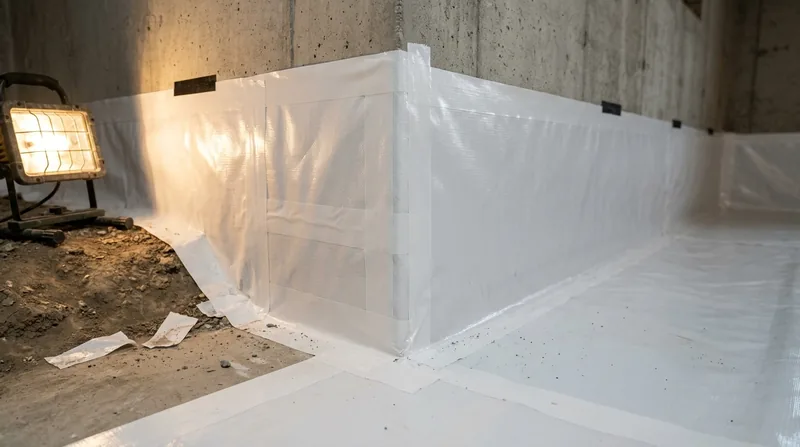




Boise sits on alluvial sand, gravel, and silt, with cemented caliche layers under the Bench and decomposed granite stepping up into the foothills. That soil holds winter snowmelt and irrigation-season recharge from the canal network along the Boise River, and it pushes ground moisture vapor straight through poured concrete, brick, and early stone basement walls. If your North End bungalow, Collister split-level, or Harris Ranch walkout smells damp and shows white efflorescence on the block, Vapor Barrier Installation in Boise is the below-grade fix that stops the vapor at the wall and slab instead of letting it condense inside your lower level. We install heavy-duty barrier sheets with sealed seams, taped terminations, and sump integration where the floor drains need it. This is dedicated basement and foundation work, not a general handyman patch. For the full picture of how vapor control fits with drainage, see our basement waterproofing service.
Why Vapor Barrier Installation Matters in Boise's Older Basements and Foothill Walkouts
The failure mode that dominates here is not a single crack. It is chronic vapor drive: soil moisture migrates through the wall and slab all summer while the water table rides high during irrigation season, then the freeze-thaw winters open hairline seams that let more moisture in. North End and East End homes on partial basements with brick or early poured walls are the most exposed, and 1990s-to-2020s foothill walkouts in Eagle and Star deal with hydrostatic pressure on the uphill side.
- We block vapor at the wall face and slab so the basement stays dry through the irrigation season.
- We seal seams and tape terminations so moisture cannot wick behind the barrier.
- We integrate the barrier with the sump basin and discharge line where the floor needs drainage.
- We correct grading and downspout extension at the same visit so surface water moves away from the foundation.
When the barrier goes in with the drainage details handled, the lower level stops feeding the musty smell and efflorescence cycle that comes back every spring.
Key info: A 1920s brick bungalow in the North End with a partial basement and visible efflorescence on the wall is a classic vapor-drive case. Sealing the crack alone will not stop it; the wall needs a continuous barrier tied into the floor detail.
For official guidance on what triggers a permit when work alters drainage or the sump discharge connection, check the City of Boise's building permit resources at cityofboise.org. Rules vary by jurisdiction, so verify before you schedule.
How We Install Vapor Barriers in Boise Basements
We start with a free basement inspection to find where the moisture is actually coming from: wall seepage, slab wicking, a failed sump pump, or a window well that drains back toward the foundation. Then we build the barrier system around the real source, not around a generic kit. The steps below are the sequence we follow on a typical Boise job.
- We inspect the walls, slab, and sump area and map the moisture paths.
- We prep the surface, remove loose parging, and address active cracks before covering them.
- We install heavy-duty barrier sheets across the walls and slab with sealed seams and taped terminations.
- We tie the barrier into the sump basin and check the check valve and discharge line.
- We verify grading and downspout extension so surface water stays off the foundation.
Every job ends with a walkthrough so you can see exactly where the barrier runs and how the sump ties in.
Key info: A split-level in Collister with a daylight basement had damp block walls every July. We installed the barrier with sealed seams, corrected the grading on the uphill side, and tied the floor detail into the existing sump. The wall stayed dry through the next irrigation season.
If the inspection shows the real problem is hydrostatic pressure under the slab rather than wall vapor, the better answer is often an interior drain tile system paired with the barrier. We tell you plainly which one your basement needs.
Vapor Barrier Approaches We Use in Boise
Not every basement gets the same barrier detail. Wall construction, slab condition, and whether a sump is present all change the spec. The table below shows the approaches we use most often in the Boise metro and what each one is best suited for.
| Approach | Description | Best for |
|---|---|---|
| Wall sheet barrier | Heavy-duty sheet across the wall face with sealed seams and taped terminations. | Brick and poured walls with efflorescence and dampness. |
| Slab barrier with dimple board | Barrier over the slab with dimple board to keep a drainage gap. | Slab wicking and damp floors in finished basements. |
| Sump-integrated barrier | Barrier tied into the sump basin, check valve, and discharge line. | Basements with active water and a working sump pump. |
| Barrier plus crack repair | Epoxy or polyurethane injection on active cracks before the barrier goes up. | Walls with visible seepage at seams and cold joints. |
We pick the approach after the inspection, and we explain why one fits your basement better than another.
Vapor Barrier Installation Cost in Boise: What to Expect
Most Boise homeowners want a number before they commit, and that is fair. Vapor barrier work typically starts around $3 per square foot of treated wall and floor area, and the final figure moves with wall length, ceiling height, how much prep the parging needs, and whether the job includes sump integration or crack injection first.
- Wall length and height drive the sheet count and the labor hours.
- Surface prep on old brick or crumbling parging adds time before any barrier goes up.
- Sump integration, check valve work, and discharge line changes add scope.
- Access matters in tight North End lots and finished basements with framing in the way.
Get two or three estimates so you can compare scope line by line, not just the bottom number. Our full breakdown lives on the pricing page.
Vapor Barrier Installation Near Me: How to Choose a Contractor Near Boise
Searching for vapor barrier installation near me in Boise turns up a lot of general contractors and plumbers who will take the job. A dedicated basement waterproofing specialist is a different trade: we diagnose moisture paths, specify the barrier and drainage detail together, and know how Treasure Valley soil behaves through the irrigation season. Ask these questions before you sign.
- Confirm the contractor is licensed and insured, and ask for a certificate of insurance.
- Get at least two or three written estimates with the scope spelled out.
- Ask for local references from Boise, Meridian, or Eagle jobs you can call.
- Ask who pulls the permit when the work alters drainage or the sump discharge connection.
- Check HOA requirements before exterior drainage changes on foothill properties.
If a contractor cannot answer these plainly, keep looking. You can reach us through the contact page to schedule a free inspection.
Vapor Barrier Installation in Boise: Pricing Guide
| Service | Price | Details |
|---|---|---|
| Wall sheet barrier | Starting at $3/sq ft | Includes heavy-duty sheet, sealed seams, and taped terminations on prepared wall surfaces. |
| Slab barrier with dimple board | Starting at $4/sq ft | Adds dimple board drainage gap over the slab for damp finished floors. |
| Sump-integrated barrier | On estimate | Ties barrier into sump basin, check valve, and discharge line; scope depends on existing pump condition. |
| Barrier plus crack injection | On estimate | Epoxy or polyurethane injection on active cracks before the barrier is installed. |
| Travel | Included | In Boise and surrounding areas, no separate call-out or mileage fee. |
| Estimate | Free | Response within 24h at (208) 314-5276, no obligation to book. |
Indicative pricing, the exact cost depends on square footage, finish, and site access. Free personalized estimate within 24h at (208) 314-5276.


